Can a Daily Multivitamin Help Slow Biological Aging? What Older Adults in Bali Should Know
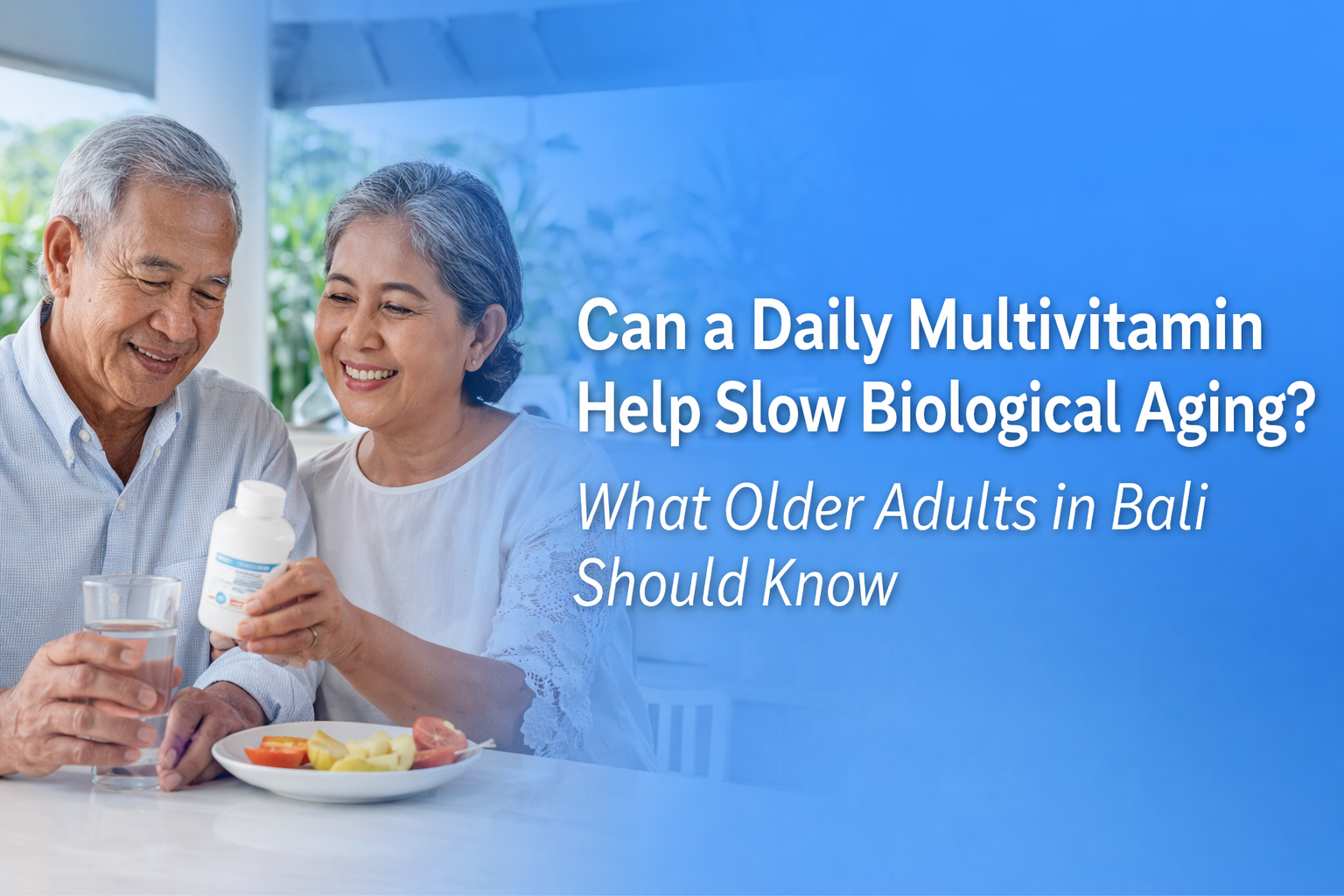
A new study has sparked interest after finding that a simple daily multivitamin may modestly slow biological aging in older adults. In the COSMOS trial, researchers found that adults taking a daily multivitamin-multimineral supplement showed slower changes in several epigenetic aging markers over two years, with the effect estimated at roughly 2.7 to 5.1 months less biological aging compared with placebo.
That sounds encouraging, but it needs context. The study looked at biological aging markers, not a guaranteed increase in lifespan or proof that a multivitamin prevents disease. Researchers and outside experts have also emphasized that multivitamins should complement healthy habits, not replace them.
For older adults in Bali, this topic is especially relevant. Heat, reduced appetite, dehydration, stomach illness, travel fatigue, and recovery after infection can all make it harder to maintain good nutrition. That does not mean everyone needs supplements, but it does mean nutrition and hydration deserve closer attention with age.
“In Bali, we often see older adults become run down more quickly because of heat, travel fatigue, dehydration, or reduced appetite after illness. A multivitamin may be a useful support for some people, but it is not a replacement for proper nutrition, hydration, and medical assessment when needed.”
— Dr Ari Saraswati, MD
What is biological aging?
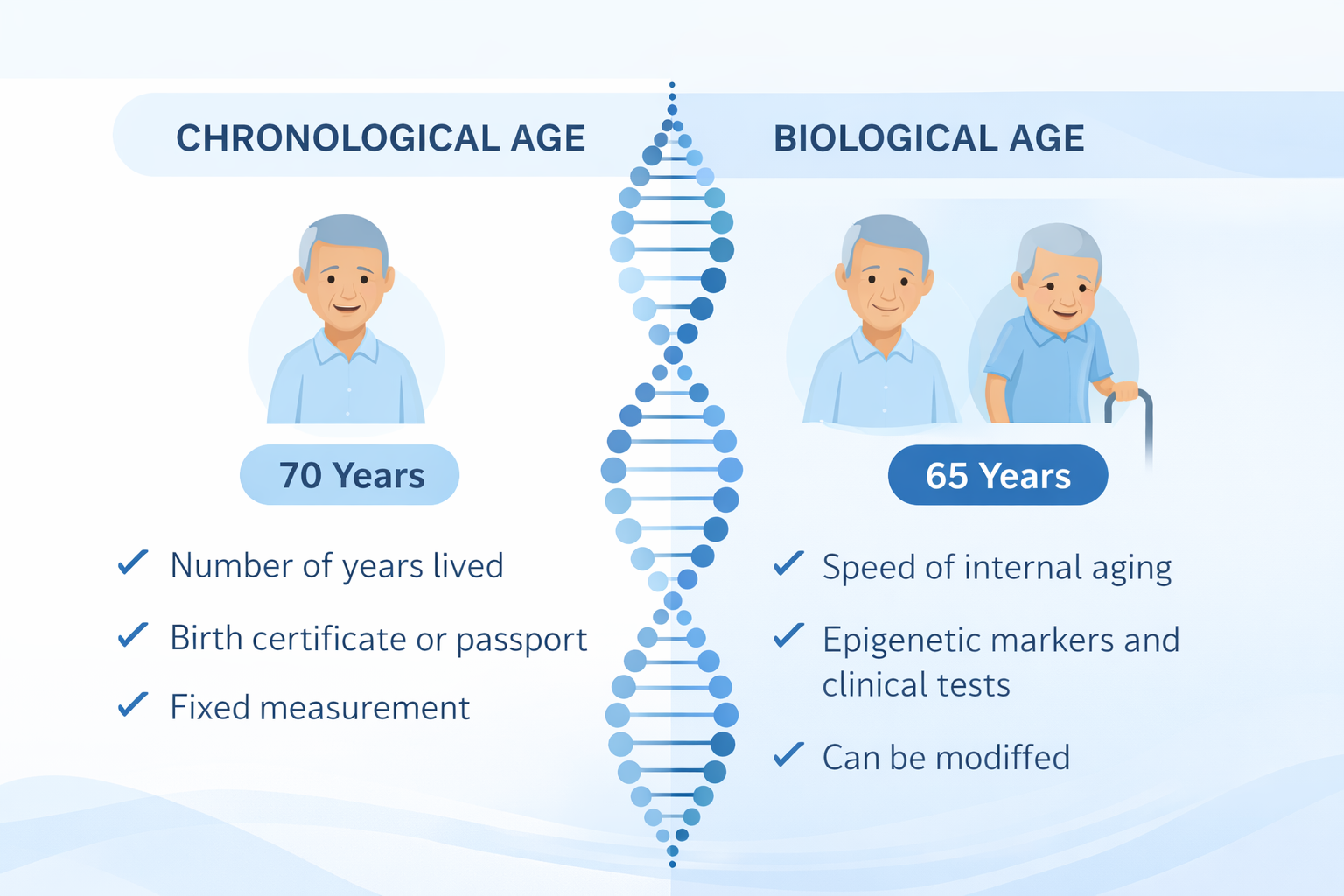
Chronological age is how many years you have lived. Biological aging is different. It refers to how quickly the body appears to be aging internally based on measurable markers. In this study, researchers used several epigenetic clocks, which are research tools based on DNA methylation patterns that change over time.
That matters because two people of the same age can often look and function very differently. But these clocks are still mainly research tools, not something used routinely in everyday medical care to guide treatment decisions.
What did the study actually find?
The findings came from a substudy within the larger COSMOS randomized clinical trial. Participants were assigned to receive a daily multivitamin-multimineral supplement, cocoa extract, both, or placebo. The multivitamin used was Centrum Silver, and researchers tested blood samples over two years using five epigenetic aging measures.
Compared with placebo, the multivitamin group showed slower biological aging across all five clocks, and two mortality-linked clocks showed statistically significant improvements. The estimated difference was about four months less biological aging over two years, with the strongest benefit seen in participants who appeared biologically older at the start. Cocoa extract did not have the same effect.
This makes the result interesting, but still modest. It does not prove that every older adult should start taking supplements, and it does not prove that multivitamins directly prevent dementia, frailty, or chronic disease.
Why might a multivitamin help?
Researchers do not yet know exactly why the multivitamin appeared to help. One theory is that a broad combination of vitamins and minerals may support processes involved in metabolism, inflammation control, and DNA-related repair. Another possibility is that a multivitamin helps fill small nutritional gaps that can build up over time, even in people who eat reasonably well.
That is especially relevant for older adults because appetite often changes with age, and illness can make intake even less consistent. Travel can make that worse. Long flights, heat, stomach upset, poor sleep, and recovery after infection can all affect what and how much someone eats and drinks.
This is where it helps to stay practical. A multivitamin may be a sensible supportive measure for some people, but it is not the main foundation of healthy aging.
What this means for older adults in Bali
For older adults living in Bali, visiting family here, or recovering in a hotel or villa, the more immediate issue is usually not “anti-aging” in the marketing sense. It is whether the person is getting enough nutrition, hydration, and recovery support during periods of stress or illness.
In real life, older adults often struggle with:
reduced appetite
dehydration in the heat
low energy after travel
slower recovery after infection
inconsistent eating and drinking habits
These problems are more immediate and more important than chasing a longevity headline. A simple multivitamin may help some people cover nutritional gaps, but the first priority should still be eating properly, drinking enough fluids, sleeping well, staying active, and getting checked when something is clearly off.
Does the type of multivitamin matter?
Probably yes. The study specifically tested Centrum Silver, a multivitamin designed for older adults. Researchers have said it is not yet clear whether all multivitamins would produce the same result. The safest interpretation is that simple, standard multivitamin-mineral products that resemble the studied supplement are more relevant than heavily marketed “special formulations.”
That does not mean more expensive is better. If anything, the study suggests that any potential benefit came from a basic daily supplement, not a high-end anti-aging product.
What a multivitamin cannot replace
This is the most important point. Even experts who viewed the study positively emphasized that multivitamins are not a substitute for healthy lifestyle habits. Regular movement, good nutrition, hydration, sleep, and social engagement remain the most reliable foundations for healthy aging.
So if an older adult is exhausted, under-eating, dehydrated, or recovering from illness, the answer is not simply to take a vitamin and hope for the best. It may be more important to review:
hydration
calorie and protein intake
recent illness
medications
sleep
whether medical review or lab testing is needed
This is where proper assessment matters.

When to seek medical advice instead of self-prescribing
If an older adult is losing weight, drinking poorly, eating poorly, becoming weak, dizzy, confused, or unusually fatigued, it is better to get checked properly rather than relying on supplements alone. The same applies if there has been vomiting, diarrhoea, fever, or a noticeable decline after travel or illness.
At Revive Medical Bali, older adults can be assessed in clinic or through mobile doctor visits to hotels and villas across South Bali. That can be especially useful when the issue may involve dehydration, infection, nutritional decline, or the need for supportive care rather than general wellness advice.
Final thoughts
The COSMOS data is interesting because it suggests that a basic daily multivitamin may modestly slow biological aging markers in older adults, especially in those who appear to be aging faster biologically. But it is still one piece of the puzzle, not a magic answer.
For older adults in Bali, the more useful takeaway is simpler: good nutrition still matters, hydration still matters, and recovery after illness should be taken seriously. A multivitamin may be a reasonable addition for some people, but it works best as support for healthy habits, not a replacement for them.