
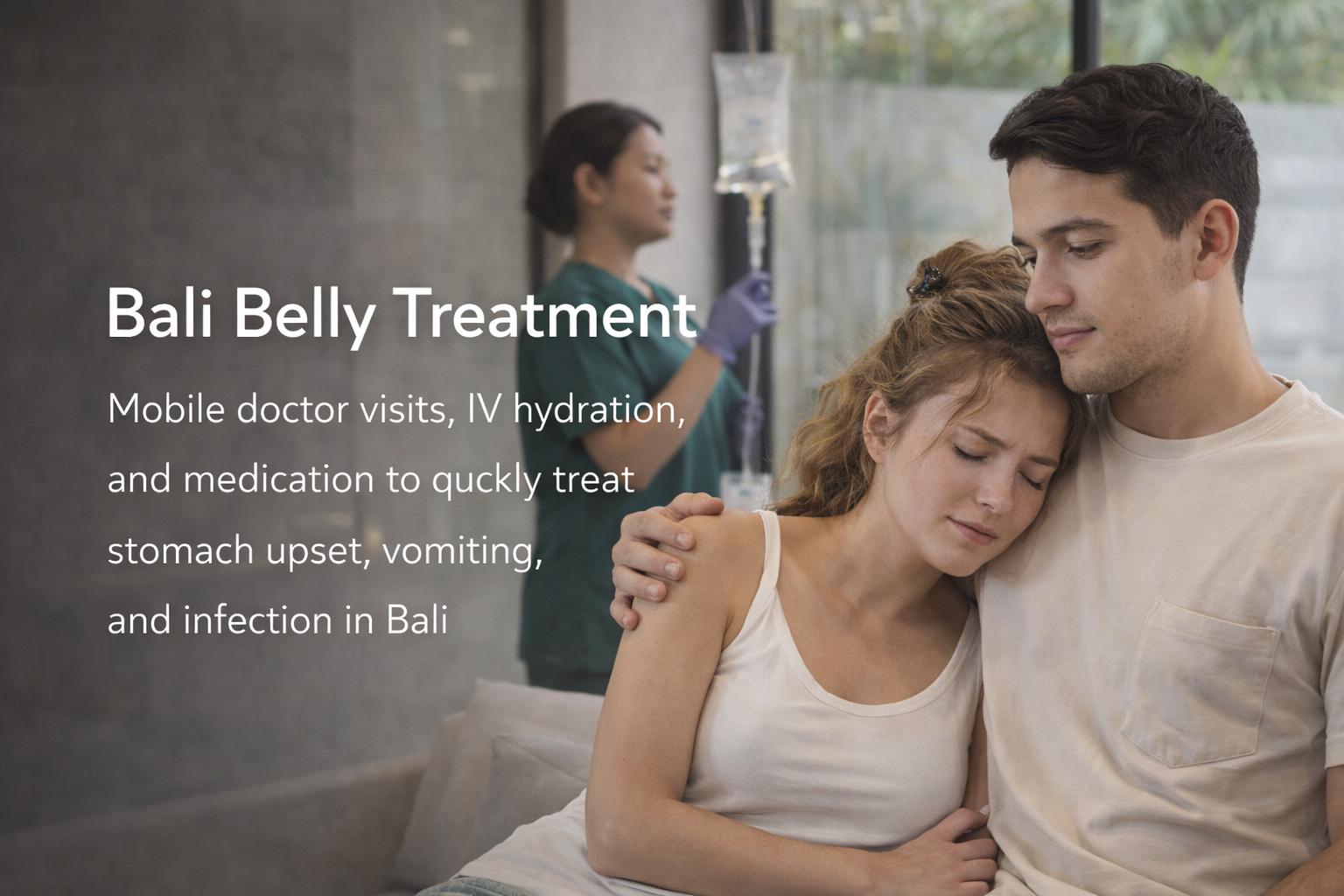
Bali Belly Treatment
Doctor-Led Medical Care for Travellers – Clinic & Hotel Call-Outs
If you’ve developed stomach cramps, diarrhoea, vomiting, nausea or fever while travelling in Bali, you’re not alone. “Bali Belly” is a common term used by travellers to describe acute gastrointestinal illness caused by unfamiliar bacteria, viruses, contaminated food or water, and changes in diet while on holiday.
At Revive Medical, our English-speaking doctors provide professional assessment and treatment for Bali Belly and other travel-related stomach illnesses, with care available at our clinic or via doctor visits to hotels and villas across South Bali. For travellers experiencing significant dehydration, our team can also advise on supportive hydration options, including IV therapy when clinically appropriate.
What Is Bali Belly?
“Bali Belly” refers to traveller’s diarrhoea and gastrointestinal infections that can occur when visiting regions with different food hygiene standards, water quality and bacterial environments. It is usually caused by bacteria, viruses or parasites ingested through contaminated food or water, or transferred via poor hand hygiene.
While many mild cases resolve with rest and hydration, moderate to severe cases benefit from early medical assessment to reduce symptom severity and prevent dehydration-related complications.
Common Symptoms of Bali Belly
Common symptoms include:
Diarrhoea
Abdominal cramps or stomach pain
Nausea or vomiting
Bloating
Fatigue and weakness
Fever
Signs of dehydration (dry mouth, dizziness, reduced urination)
Children, older adults and people with underlying medical conditions are more vulnerable to dehydration and should be monitored closely.
When to Seek Medical Care
Seek medical assessment if you experience:
Persistent diarrhoea or vomiting
Fever
Severe abdominal pain
Blood or mucus in stool
Inability to keep fluids down
Signs of dehydration
Symptoms lasting longer than 24 hours
Early treatment can significantly shorten recovery time and help prevent complications.
How Bali Belly Is Treated
Treatment depends on symptom severity and clinical assessment by a doctor:
Oral rehydration & supportive care
Mild cases may be managed with oral rehydration salts, anti-nausea medication and dietary guidance.
IV hydration therapy (when clinically appropriate)
For moderate to severe dehydration, IV fluids can help restore hydration and electrolytes more rapidly, especially when vomiting limits oral intake. Learn more about Medication
Doctors may prescribe medication to manage symptoms or infection when appropriate.
Monitoring & follow-up
Our team provides guidance on recovery, diet and warning signs requiring further review.
Clinic Visits or Doctor Call-Outs to Hotels and Villas
We offer:
In-clinic consultations
Doctor visits to hotels and villas across South Bali
This allows you to receive professional care while resting comfortably.
Why Bali Belly Is More Common During Rainy Season
Heavy rainfall can contaminate water sources and food preparation areas, while warm, humid conditions allow bacteria to multiply faster on prepared food. These factors increase the risk of gastrointestinal illness, even at venues that are usually considered safe.
For practical seasonal health advice, see.
Practical Tips to Reduce Your Risk
Drink sealed bottled water only (including for brushing teeth)
Be cautious with ice and uncooked foods
Choose busy venues with high food turnover
Wash hands or use sanitiser before eating
Avoid food exposed to rain or left sitting out
Stay well hydrated in Bali’s tropical climate
Travel Insurance & Medical Documentation
Many travel insurance policies cover treatment for traveller’s diarrhoea and dehydration. We can provide medical documentation to support insurance claims where required.
Frequently Asked Questions
How long does Bali Belly usually last?
Mild cases often resolve within 24–72 hours. More severe cases may take longer and benefit from medical treatment.
Is Bali Belly dangerous?
Most cases are mild, but dehydration can become serious, particularly for children and older adults.
Is IV hydration always necessary?
No. IV therapy is used when oral fluids are not sufficient due to vomiting or significant dehydration.
Can children be treated?
Yes, but children can become dehydrated more quickly and should be assessed promptly if symptoms are significant.
Will travel insurance cover Bali Belly treatment?
Many policies do. Our clinic can provide documentation for insurance claims.
Can I continue my holiday after treatment?
Your doctor will advise based on your condition. Many travellers feel well enough to resume activities after appropriate treatment and rest.
Get Medical Help for Bali Belly
If you’re feeling unwell while travelling in Bali, early medical care can help you recover faster and get back to enjoying your trip.
Contact Revive Medical to arrange a clinic visit or doctor call-out across South Bali.