
Bathing Babies & Toddlers in Bali: How to Keep Your Child Safe From Bali Belly & Waterborne Illness
Travelling to Bali with babies and toddlers is an amazing experience — but it’s totally normal for parents to worry about water safety, hygiene, and the risk of tummy bugs when bathing young children. Questions about Bali’s tap water, filters, and whether bath water needs to be boiled come up constantly in parenting groups and expat forums.
At Revive Medical, we regularly see families who are unsure how cautious they need to be. The good news? With a few sensible precautions, you can bathe your children safely and enjoy your holiday without turning bath time into a stressful operation.
Is Tap Water in Bali Safe for Bathing Children?
In Bali, tap water is generally not suitable for drinking, but it is commonly used for showering and bathing. For most adults and older children, skin contact with tap water is not a problem. The main risk occurs when water is accidentally swallowed.
Babies and toddlers are more likely to:
Splash water into their mouths
Suck their fingers after touching bath water
Put bath toys in their mouths
Because of this, young children have a slightly higher risk of stomach upset compared to adults. This doesn’t mean bath time is dangerous — it just means it’s smart to take a few extra precautions.
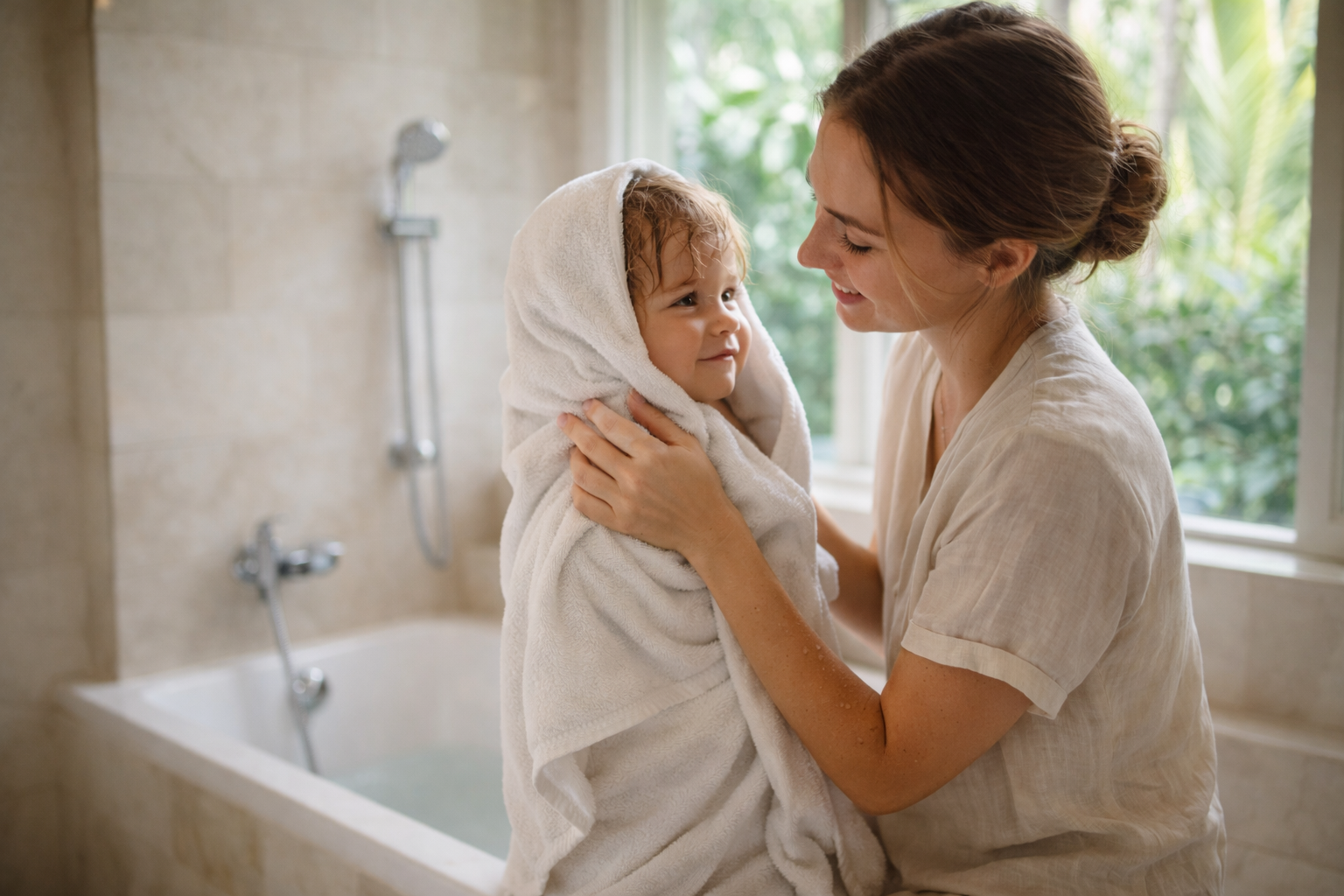
Can Bath Water Cause Illness in Children?
Illness related to water exposure almost always comes from ingesting contaminated water, not from water touching the skin. Bali’s water supply varies depending on the location, plumbing systems, water storage tanks, and whether filtration systems are in place.
Children are more vulnerable because:
Their immune systems are still developing
They’re more likely to accidentally swallow water
They explore with their mouths
The risk is typically higher in:
Private villas with older plumbing
Properties using untreated water storage tanks
Large resorts and hotels in areas like Nusa Dua generally have more consistent water treatment systems, although tap water is still not intended for drinking.
Practical Ways to Bathe Babies & Toddlers Safely in Bali
You don’t need to overcomplicate bath time. These simple steps significantly reduce risk:
✅ Keep Baths Short and Shallow
Avoid long soak sessions. Shallow baths reduce the chance of water getting into the mouth.
✅ Avoid Bath Water in the Mouth
Try to limit splashing games and discourage drinking bath water. Supervision is key.
✅ Use Bottled or Filtered Water for the Face
For babies and toddlers, use bottled or filtered water when:
Rinsing faces
Cleaning pacifiers and bottle teats
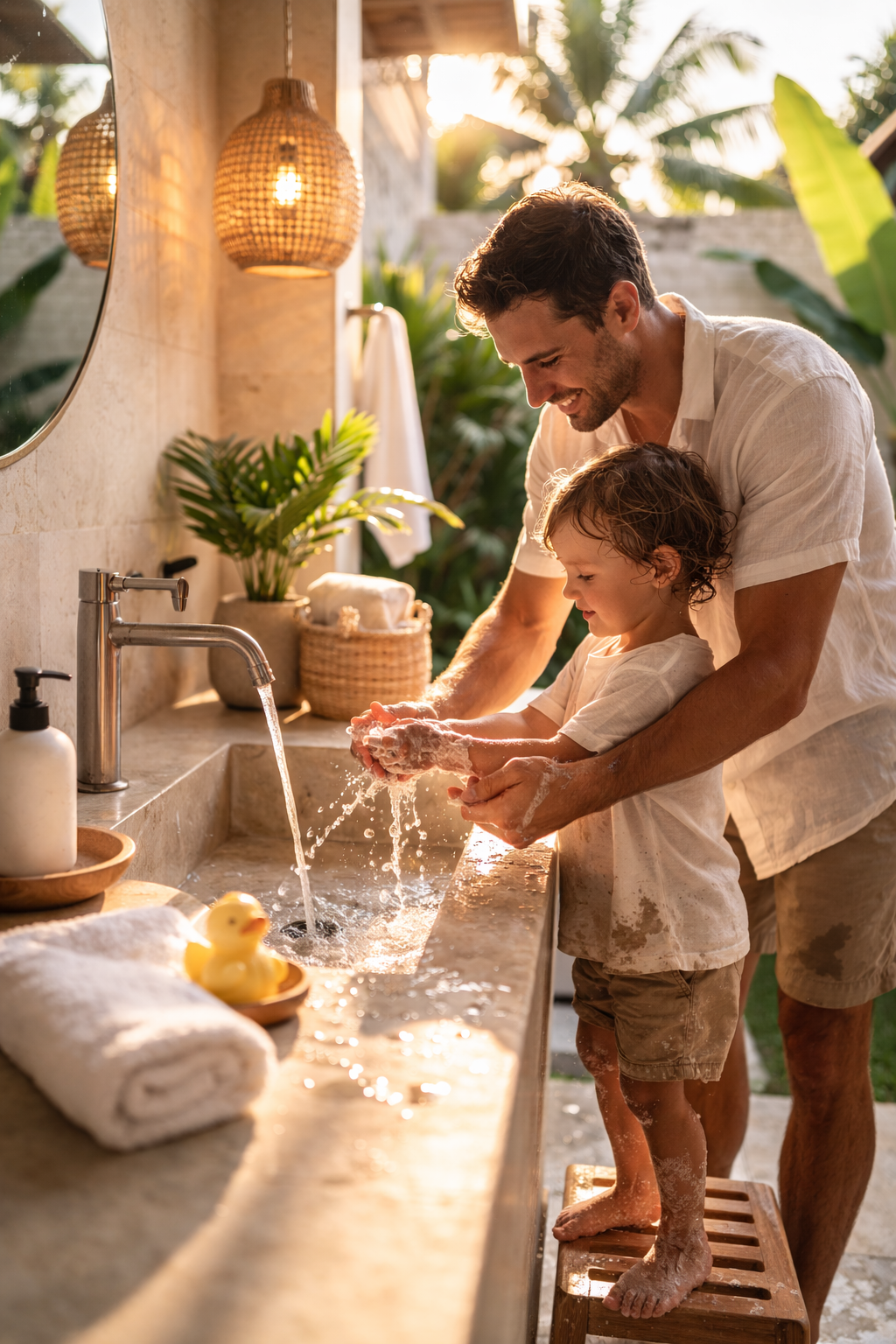
Washing hands before meals
✅ Portable Shower Filters (Optional)
Some families bring small shower filters. These can improve water clarity and reduce sediment, but they’re an extra precaution rather than a necessity.
✅ Resorts vs Villas
Resorts often have central water treatment systems, making bath water quality more consistent than some private villas. This doesn’t mean villas are unsafe — just be a little more mindful with younger children.
Should Parents Boil Bath Water in Bali?
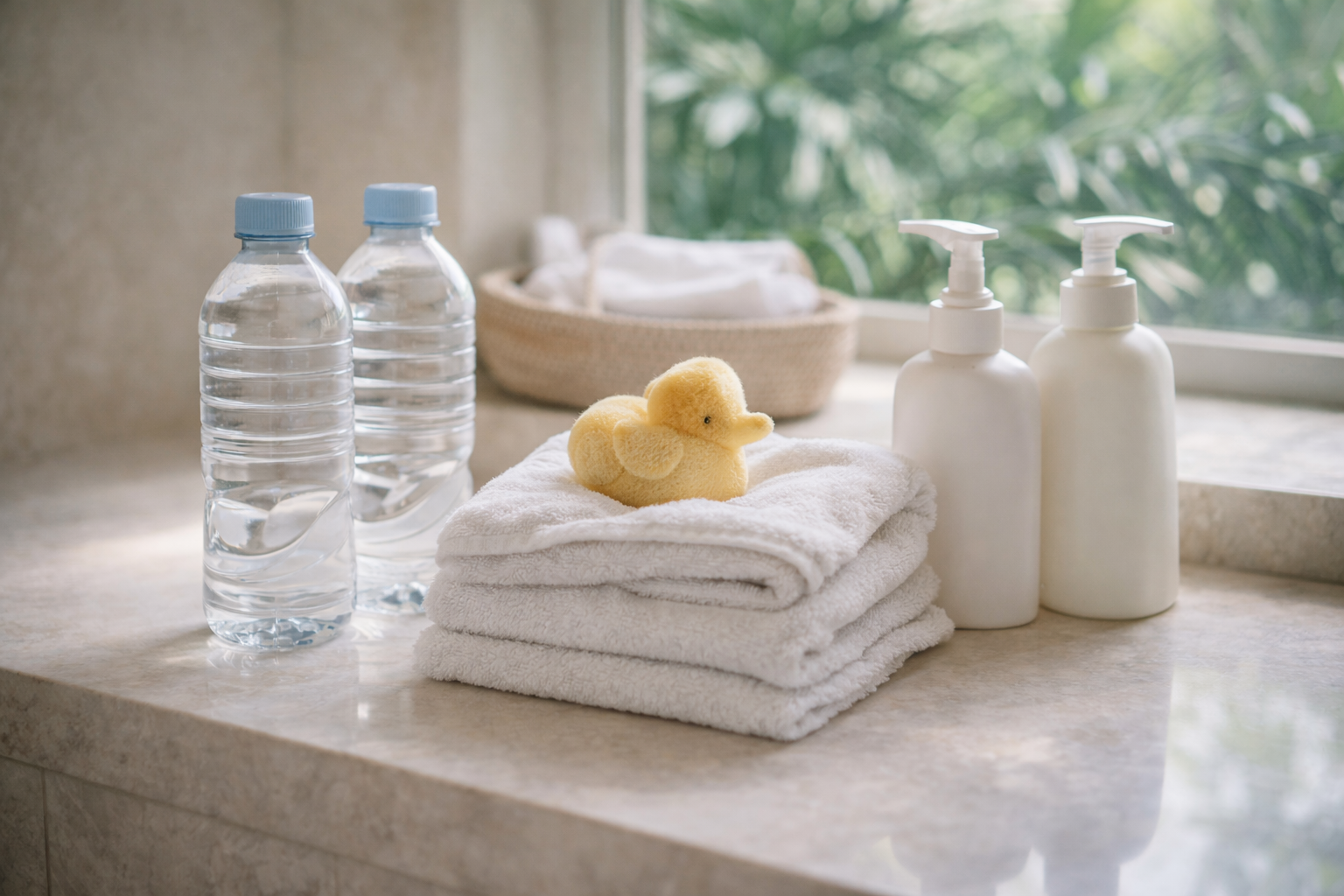
Boiling bath water is not necessary and not practical for full-body bathing. The primary risk is ingestion, not skin contact. Instead of boiling bath water:
Use bottled water for mouth and face rinsing
Avoid allowing young children to drink bath water
Clean items that go into the mouth with safe water
This approach offers a good balance between safety and practicality while travelling.
Extra Hygiene Tips for Families Travelling in Bali
Beyond bath time, these habits help reduce the risk of tummy bugs:
Brush teeth using bottled or filtered water
Wash hands before meals (bottled water for babies)
Avoid unwashed raw fruits and vegetables for young children
Stick to freshly cooked meals
Clean toys that fall on wet bathroom surfaces
Avoid letting babies crawl on wet bathroom floors
What to Do If Your Child Becomes Unwell
Despite best precautions, children can still develop stomach upsets while travelling. Because young children can become dehydrated more quickly than adults, early medical assessment is especially important if your child develops:
Persistent diarrhoea
Repeated vomiting
Fever
Signs of dehydration (dry lips, reduced urine output, lethargy, sunken eyes)
At Revive Medical, we can assess and treat children on a case-by-case basis, depending on their age, symptoms, and clinical condition.
Some children are able to tolerate and benefit from oral medications and oral rehydration, however very young children and infants may deteriorate quickly and may require closer monitoring or paediatric observation. In certain cases, referral to a hospital or paediatric specialist may be the safest option.
Revive Medical provides:
In-clinic medical consultations
Doctor visits to hotels and villas
Family-friendly medical assessments
Evaluation and management of dehydration and gastrointestinal illness
Prompt assessment helps ensure your child receives the appropriate level of care early — preventing minor illness from becoming a major disruption to your family’s holiday.
Final Reassurance for Parents
Thousands of families visit Bali every week with babies and toddlers — and the vast majority enjoy healthy, trouble-free holidays. You don’t need to turn bath time into a sterile medical procedure. Sensible precautions, good hygiene habits, and early medical support if needed are more than enough to keep your children safe.
If you or your child feel unwell while in Bali, Revive Medical is here to support you with professional care — whether you visit our clinic or prefer a doctor to come to you.