
Why Bali Belly and Stomach Illness Spike During Bali’s Rainy Season — And What Travellers Can Do About It
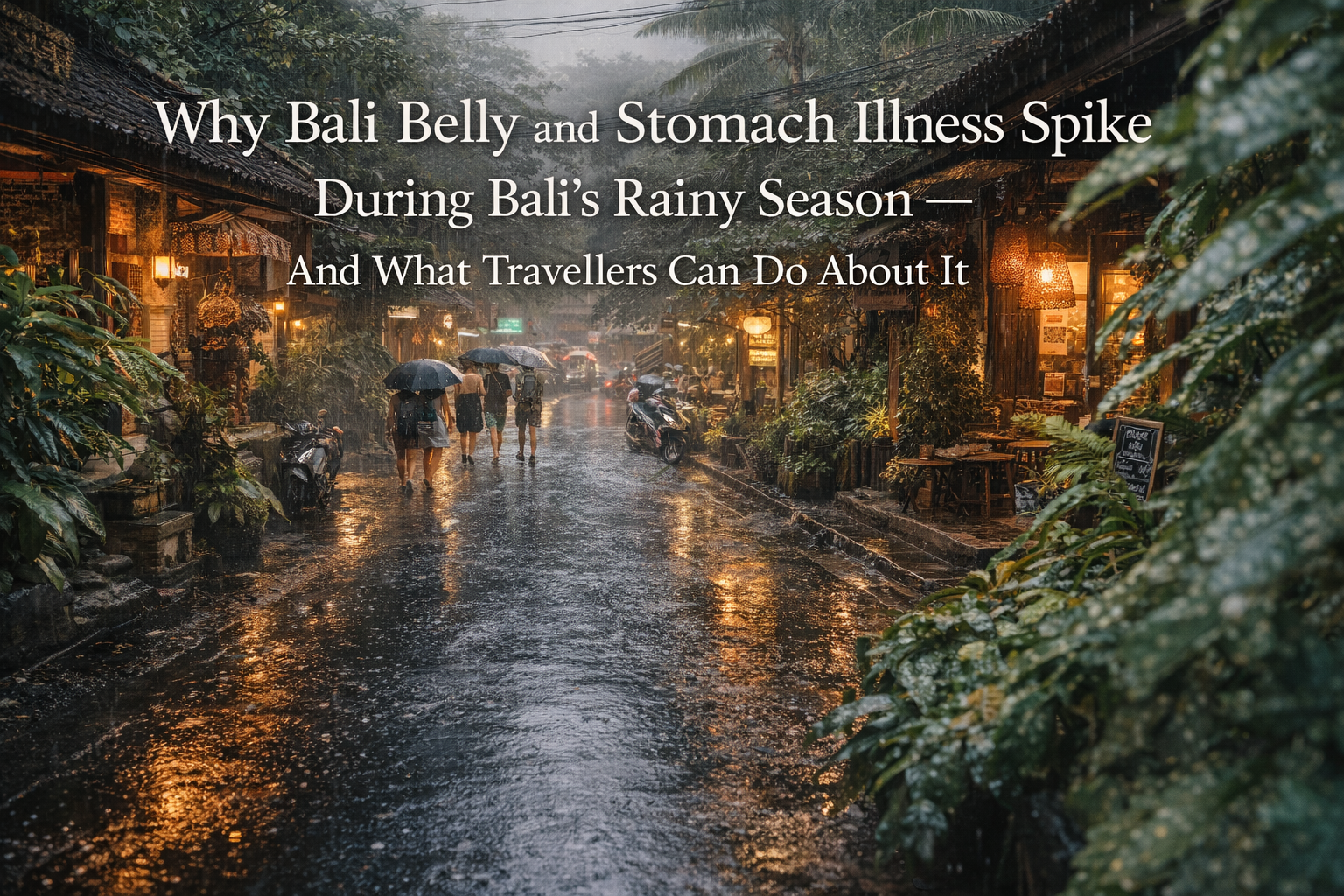
Bali’s rainy season brings cooler afternoons, dramatic tropical storms and lush green landscapes — but it also coincides with a noticeable increase in stomach illness among travellers. Local medical teams and clinics consistently report a seasonal rise in gastrointestinal illness commonly referred to as “Bali Belly” during wet months.
For many visitors, stomach upset can be an unexpected and disruptive part of their holiday. Understanding why illness rates increase during the rainy season — and what simple steps you can take to reduce your risk — can help you stay well and enjoy your time in Bali.
Why Rainy Season Increases the Risk of Stomach Illness

During Bali’s wet season, heavy rainfall can overwhelm drainage systems and increase surface runoff. This runoff can contaminate water sources used in food preparation and cleaning. Even venues that usually maintain good hygiene standards can be affected during periods of intense rain or temporary flooding.
Warm, humid conditions also create an environment where bacteria multiply more rapidly on prepared food, particularly when food is left out for extended periods. Power fluctuations during storms may impact refrigeration, increasing the risk of food spoilage and foodborne illness.
Flooding During Rainy Season: What Travellers Should Know
Heavy rainfall can occasionally lead to localised flooding in low-lying areas and streets with limited drainage. While most flooding subsides quickly, floodwater can contain bacteria, sewage runoff and debris, increasing the risk of skin infections, stomach illness and injury.
Walking through floodwater may expose small cuts or abrasions to bacteria, and wet, slippery surfaces increase the risk of falls. Flooding can also disrupt food storage and refrigeration in some areas, contributing to higher risk of foodborne illness following heavy rain.
Practical Flood Safety Tips for Travellers
Avoid walking through floodwater where possible
Wear closed footwear in wet or flooded areas
Wash hands and feet thoroughly after contact with floodwater
Avoid food and drinks that may have been exposed to flood conditions
Be cautious around open drains and debris after storms
Monitor local weather updates during periods of heavy rainfall
What Local Doctors See During Wet Season

Clinics in Bali typically see an increase in travellers presenting with diarrhoea, vomiting, stomach cramps and dehydration during rainy months. Dehydration is often more pronounced due to the combined effects of gastrointestinal illness and Bali’s warm, humid climate, which increases fluid loss even when temperatures feel cooler.
Travellers sometimes underestimate symptoms, assuming stomach illness will resolve quickly. Early medical assessment and appropriate treatment can significantly reduce recovery time and help prevent complications.
How Stomach Illness Affects Your Body

Gastrointestinal illness can lead to dehydration, electrolyte imbalance and fatigue. Persistent vomiting or diarrhoea can make it difficult to keep fluids down, worsening dehydration and prolonging recovery. Children, older adults and people with underlying health conditions are more vulnerable to dehydration and should be monitored closely.
If symptoms persist or dehydration becomes a concern, travellers should seek medical assessment. Clinics such as Revive Medical provide professional Bali Belly treatment in Bali, including in-clinic consultations and doctor visits to hotels and villas across South Bali.
Practical Steps Travellers Can Take to Reduce Risk

While no method can eliminate risk entirely, these precautions can significantly reduce your chances of becoming unwell during the rainy season:
Drink sealed bottled water only, including when brushing teeth
Be cautious with uncooked foods
Choose busy venues with high food turnover
Wash hands regularly or use alcohol-based hand sanitiser
Avoid food exposed to rain or sitting out in open air
Stay well hydrated in Bali’s humid climate
Alcohol, Dehydration and Stomach Illness
Alcohol can worsen dehydration and irritate the stomach lining, increasing the severity of gastrointestinal symptoms. During rainy season, when dehydration risk is already higher, pacing alcohol consumption and prioritising water intake can help reduce symptom severity and support recovery.
When to Seek Medical Care

Travellers should seek medical care if they experience persistent vomiting or diarrhoea, fever, significant abdominal pain, or signs of dehydration such as dizziness, fatigue or reduced urination. Early medical care can shorten recovery time and prevent minor illness from becoming a major holiday disruption.
Staying Well During Bali’s Rainy Season

Bali’s wet season doesn’t have to mean spending your holiday unwell. By being mindful of food and water choices, practising good hygiene, and seeking early medical care when needed, travellers can significantly reduce their risk of stomach illness and recover more quickly if symptoms occur.
Local medical clinics are familiar with seasonal travel-related illness patterns and can provide timely care to help visitors get back to enjoying their time in Bali.
About Revive Medical Clinic
Revive Medical Clinic is a trusted Bali-based medical clinic providing professional care to international travellers and local residents across South Bali. Our English-speaking medical team offers in-clinic consultations and mobile doctor visits to hotels and villas, supporting travellers with common travel-related health concerns including Bali Belly, stomach illness, dehydration, and general medical issues.
Whether you are staying in Seminyak, Canggu, Uluwatu, Nusa Dua or nearby areas, Revive Medical Clinic provides convenient access to medical assessment and treatment without the stress of navigating unfamiliar healthcare systems while unwell.
How to book:
Appointments and hotel call-outs can be arranged online or via WhatsApp:
👉 https://wa.me/6282142748093